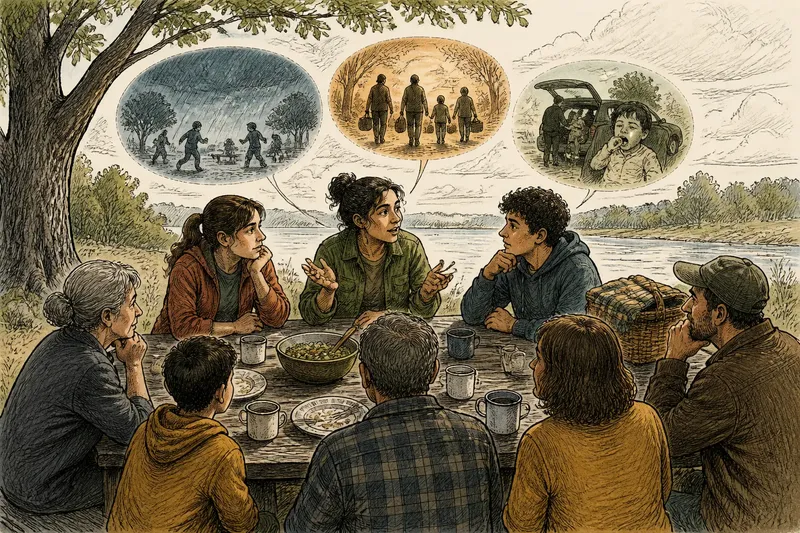
Why a Story Changes When the Listener Joins In
Why a story changes when the listener joins in: see how questions, reactions, and pauses steer an oral telling while leaving room for many versions.
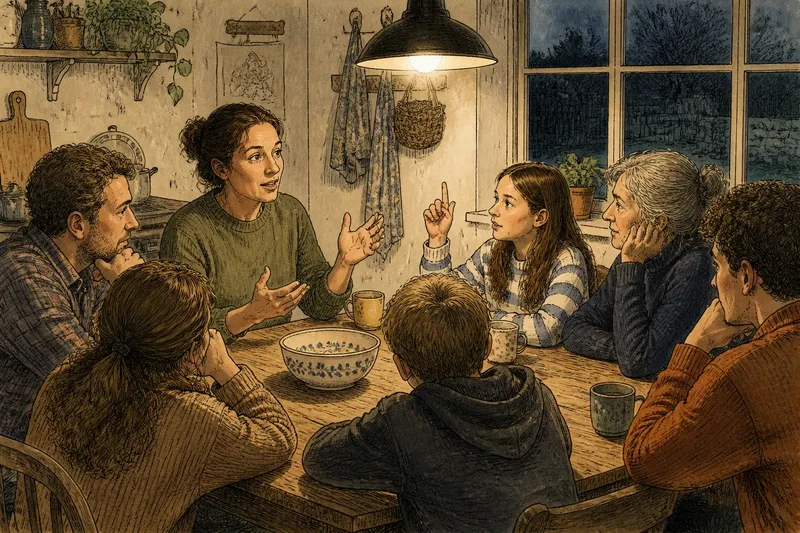
Why a story changes when the listener joins in is easiest to see at a kitchen table: a teller reaches the moment a child disappeared from view, and someone asks, “Did anyone hear the gate?” The question does not merely interrupt. It directs attention toward a sound, and the teller may pause, remember the gate, or decide that the silence around it matters more. The story is still being told, but now the listener has entered its making.
In oral storytelling, a telling is an event shared by the people present, not simply a fixed text delivered unchanged. A listener’s question, laugh, frown, or quiet can influence what the teller explains, emphasizes, or leaves open. That influence need not settle what “really happened.” It can produce another intelligible version, shaped by a different moment and a different relationship between teller and audience.
Attention Is Shared
A teller makes choices as a story unfolds: which person to name, how long to stay with a scene, whether to explain a motive, and where to move quickly. Listeners respond with signals, even when they do not speak. A nod can invite continuation; a puzzled expression can suggest that a detail has not landed; laughter can tell the teller that a line has been heard as playful.
These signals are not instructions with a single meaning. A smile might show recognition, politeness, or discomfort. A careful teller reads the room as a whole rather than treating one gesture as a vote. The audience influences the telling, but it does not dictate it.
That distinction matters because responsiveness is not the same as surrendering control. The person telling the story still chooses whether to answer, redirect, slow down, or continue. A listener may open a path; the teller decides whether to take it.
Questions Change the Route
A question can shift a story’s route by asking for a missing piece. “Where was your aunt standing?” may draw attention to a doorway, while “What did she say afterward?” may bring the account toward a conversation. Neither question is neutral: each proposes what might be worth hearing next.
Some questions invite detail without challenging the teller’s account. Others carry an assumption that can alter the room’s mood: “Why didn’t you stop him?” may sound less like curiosity than blame. A teller may answer directly, resist the premise, or set a boundary. The resulting pause or change of subject is part of the interaction, not evidence that the listener has uncovered a hidden, definitive version.
When you want to ask a question, consider whether it opens space or corners the teller. “What do you remember about the room?” leaves room for uncertainty. “You must have been terrified, right?” supplies an emotion and asks the teller to confirm it. A softer question lets the teller name a feeling, reject the suggestion, or move on.
Reactions Set the Emphasis
Reactions can affect not only what comes next but also how earlier details are understood. If a listener laughs at a small mishap, the teller may lean into its comic side. If the room grows still, the teller may give the consequences more time. The words can remain similar while their emphasis shifts.
Imagine a neighbor telling a story about a power outage, with a child’s drawing mentioned in passing. A listener asks whether the drawing was found by candlelight. The teller might remember that the family searched for it together and spend more time on that shared search. The new telling gives the drawing greater weight, while neither the question nor the added emphasis establishes that this is the only proper version.
Reactions can also narrow a story. If listeners reward only the funny parts, a teller may come to skip the uneasy or complicated ones in that company. Not every silence signals discomfort, and not every laugh signals approval; the useful habit is to notice patterns without assuming you can read another person’s mind.
Pauses Hold More Than One Meaning
A pause is often treated as empty space waiting for someone to fill it. In a shared telling, it can be a choice: the teller may be searching for a name, deciding how much to say, or letting an image settle. Listeners who rush to complete the sentence may unintentionally replace the teller’s words with their own.
Waiting does not require a formal silence or a solemn mood. It can be as simple as letting the teller finish looking for a word before asking a follow-up. If the person resumes, the story continues along their chosen line. If they do not, a change of subject can respect that boundary without turning the pause into a public puzzle.
There is no need to praise every pause as profound. Sometimes the teller has lost the thread or wants a reminder. A brief, open prompt such as “Would you like to keep going?” offers help without deciding what the silence means.
Where Should the Listener Step In?
Should I correct a detail as it is told?
Ask first whether the detail matters to the story and whether the teller has invited correction. If it does matter, a quiet question after the telling may be easier to receive than a public interruption; a difference in memory can be acknowledged without turning either person into the final authority.
What if the teller asks the audience for help?
Offer what you remember as your own recollection, not as a replacement for the teller’s account. Phrases such as “I remember it a little differently” leave space for both versions to remain visible.
Can silence be a response?
Yes, though it does not carry one fixed meaning. Give the teller room to continue, then use a gentle check-in if the moment calls for it rather than assigning the silence an emotion.
How can a group avoid crowding the story?
Let one person speak at a time and make questions concise enough for the teller to answer or decline. The goal is not to eliminate audience influence, but to make it possible for the teller to choose which invitations to follow.
Many Versions Can Stand
When listeners help shape a telling, the result may emphasize a detail that another audience barely heard. A cousin’s question can bring forward a remembered route home; a child’s reaction can make an old family phrase newly noticeable. That change belongs to the exchange. It need not erase earlier tellings or settle disagreements about what occurred.
It helps to distinguish the story’s remembered material from the choices made in telling it. A person may be certain about who was present yet unsure of the exact wording. Another may recall the wording but not the sequence. Naming uncertainty plainly can keep a telling honest without forcing it into a single, polished account.
Not every audience contribution deserves more effort. There is little value in drawing out every uncertain detail, debating a harmless difference, or asking for an explanation the teller has already declined to give. A story can remain partial and still be worth sharing.
Make Room for Response
A considerate listener does more than stay quiet, and a responsive teller does more than answer every question. Both attend to what the other person is offering, then leave room for refusal, uncertainty, and redirection. A nod may encourage; a question may open a new scene; a pause may return the next choice to the teller.
That is why a story changes when the listener joins in: the telling is shaped by attention moving between people. To listen well is not to steer toward the most complete or convincing version. It is to help the teller continue on terms they can recognize as their own, while allowing another telling to remain possible.