Story Circle or Paired Telling? Choosing a Group Format
Choose a story circle or paired telling by matching the format to your purpose, room layout, and privacy expectations before anyone begins sharing.
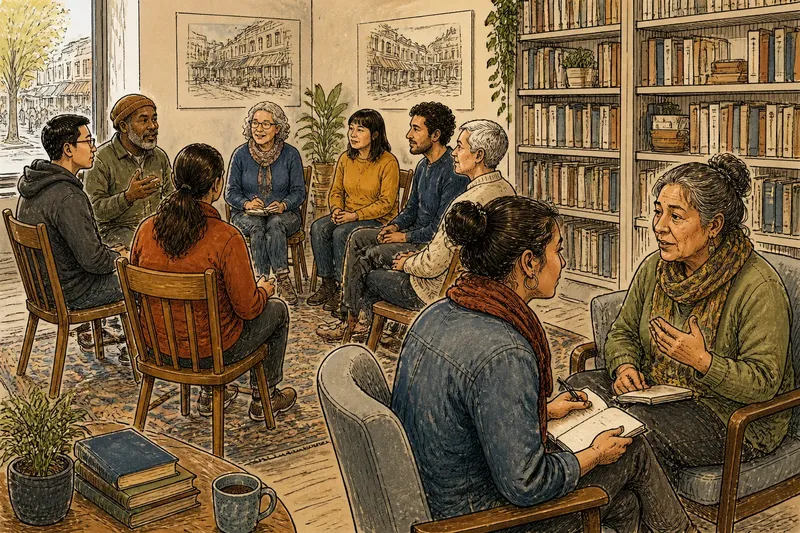
Should your gathering use a story circle or paired telling? For a story circle or paired telling session, the deciding question is what the group should carry away: one shared sequence, or several separate exchanges. Choose the format around that purpose, then make the rules for sharing clear.
Shared or separate stories
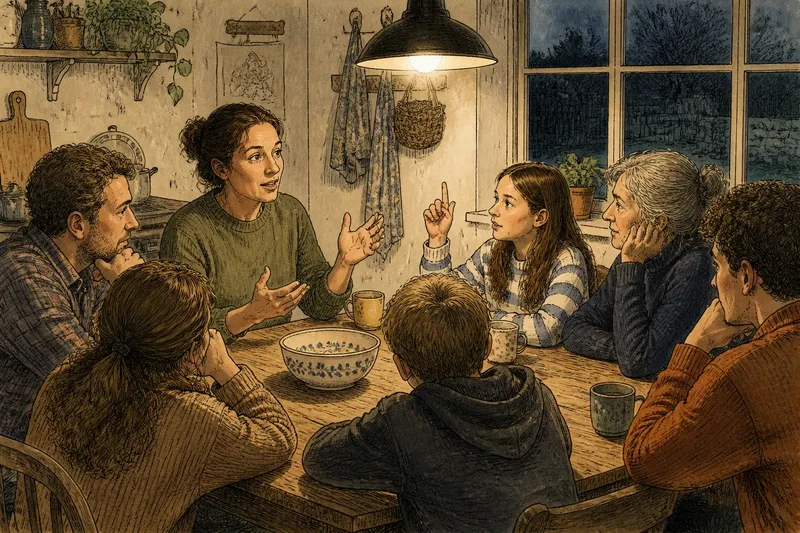
A story circle makes the group’s sequence part of the experience. Each teller’s contribution sits beside the others, creating a collective account shaped by what people choose to add, echo, or leave unsaid. This format suits gatherings where the relationship among stories matters as much as any single telling.
Paired telling creates parallel accounts instead. Two people can explore a memory or theme without turning it into material for the whole group. The format is useful when the aim is personal reflection, intimate exchange, or gathering several perspectives without asking anyone to speak publicly.
Neither format is automatically more inclusive or more meaningful. The useful distinction is what happens to the stories after they are told: a circle makes them part of a common event, while paired telling can keep them within the pair unless both people consent to share something onward.
Shape the story task
The prompt should fit the form. For a circle, ask for contributions that can stand on their own and connect to a shared theme, such as a place, an object, or a moment of change. Avoid prompts that imply everyone must reveal something private or produce a polished ending.
For pairs, a prompt can invite a fuller account or a question-and-listening exchange. Partners might explore what they remember about a neighborhood, a family recipe, or a familiar journey. If the gathering is preserving community memory, decide in advance whether anyone will take notes or record stories; ask permission before keeping or circulating personal material.
Say you are organizing an invented gathering for a neighborhood library, and the starting point is a set of memories about the old market street. If the intended result is a collective portrait, invite each person in a circle to name one place and what happened there; the observable result should be a sequence of distinct places connected by a common setting. If people want to examine private memories without making them public, pair them and agree that no story will be repeated outside the conversation unless its teller explicitly permits it.
Design the invitation
A good invitation says what participants are being asked to do and what they are not being asked to do. In a circle, explain whether people may pass, whether replies are welcome, and whether the group will build on earlier tellings. In pairs, specify who speaks first, when partners switch, and whether the listener should ask questions or simply receive the story.
These distinctions matter in oral traditions, where a story may change through repetition and response. A group can welcome variation while still being clear about what belongs to the teller: permission to listen is not permission to quote, record, or retell.
Keep the invitation concrete. “Share a memory connected to a place you know” leaves room for choice; “tell your most important family story” can sound like a demand for disclosure. Let participants decide how much detail to offer.
Check the format fit
- Check whether the aim is a shared account; if yes, choose a circle, and if not, use pairs or another format.
- Check whether stories may be repeated beyond the gathering; if everyone agrees to public sharing, state how it will happen, and if not, keep contributions within the original audience.
- Check whether the prompt requires personal disclosure; if it does, replace it with an optional, less intimate prompt, and if it does not, keep the invitation as written.
- Check whether each pair can speak without neighboring conversations becoming part of their exchange; if yes, use pairs, and if not, rearrange the space or choose a single shared format.
- Check whether the group wants a record; if participants consent to notes or recording, name who may access them, and if they do not, keep the gathering unrecorded.
- Check whether a circle’s contributions should connect or remain distinct; if connection is desired, offer a common theme, and if not, invite self-contained tellings without asking speakers to respond to one another.
Story circle or paired telling?
What is the difference between a story circle and paired telling?
A story circle presents tellings to one group, so the sequence becomes part of a shared event. Paired telling gives each story a smaller audience and does not make it public to the rest of the gathering by default.
How can a group protect stories told in pairs?
Agree beforehand that partners will not repeat, quote, or record one another’s stories without permission. If the group later invites public sharing, let each teller choose what, if anything, to bring forward.
Can a story circle be used to build a shared history?
Yes, if the group treats each contribution as one perspective rather than a complete account. A common prompt can reveal connections, while permission and careful attribution help prevent personal memories from being presented as universal.
What should happen when someone does not want to tell?
Make passing an ordinary option, not an exception that needs explaining. A participant can listen, offer a brief contribution, or decline without losing their place in the gathering.
Make a record responsibly
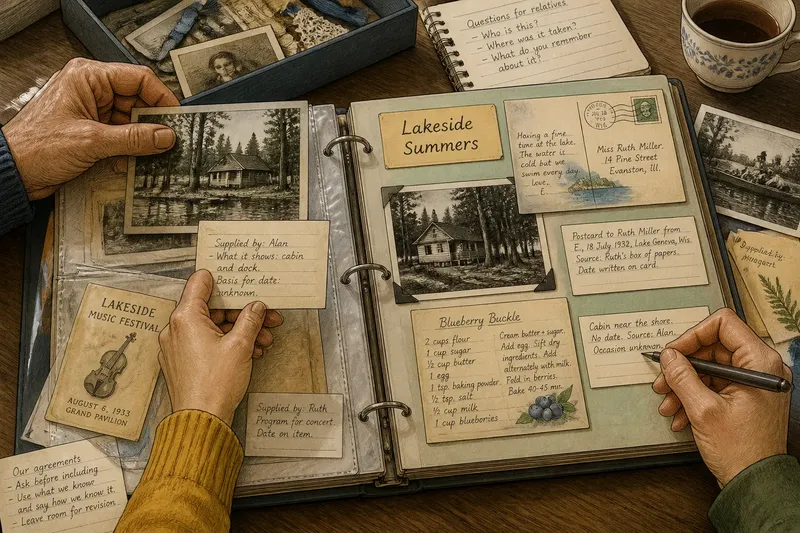
If the purpose includes an archive, distinguish the live gathering from the material that will be preserved. Explain whether notes, audio, or written stories will be kept, who can consult them, and whether tellers can review or withdraw their contributions. For legal or institutional requirements, consult a qualified professional rather than relying on informal group agreements.
Not every session needs a facilitator’s script, a ceremonial object, or a written record. Those additions are not worth the effort when they distract from the group’s purpose or create the impression that participation requires a performance. A clear prompt and an explicit agreement about privacy may be enough.
Let purpose decide
Choose a story circle when the group wants a shared sequence or a collective portrait; choose paired telling when private attention and distinct exchanges matter more. If the gathering needs both, make the transition explicit and ask before anything shared privately enters the public conversation.
For a story circle or paired telling, the most useful choice is the one that matches the intended life of the stories. Decide whether they are meant to connect, remain with their tellers, or enter an archive, and build the format around that answer.